If your dog gets a dodgy tummy after a change of food, a course of antibiotics, or simply hoovering up something they shouldn’t have, a good probiotic can settle things down fast. They top up the friendly gut bacteria that keep digestion running smoothly — and I’ve come to think of a probiotic paste as an essential bit of the dog first-aid cupboard, right next to the poo bags.
The best dog probiotic in the UK is Pro-Kolin Advanced Paste. Made by veterinary brand Protexin, it’s the one vets hand out for upset tummies — a fast-acting probiotic and prebiotic paste that soothes the gut and firms up loose stools, in a syringe you can squeeze straight onto food or into the mouth.
Below are the five I’d keep in mind for different situations, from that go-to paste for emergencies to daily chews for long-term gut health, plus how I’d choose between them — and the important bit about when a runny tummy needs a vet, not a supplement.
Key Takeaways
- Best overall: Pro-Kolin Advanced Paste — the vet-recommended paste for upset tummies, fast-acting and easy to give.
- Best for firm stools: Protexin Pro-Fibre — a high-fibre gut supplement that also helps with anal glands and loose stools.
- Best daily chew: Oimmal Probiotic Soft Chews — a tasty pumpkin-and-flaxseed chew for everyday gut support.
- Best value: 150-Count Probiotic Chews — a big tub of probiotic-and-enzyme chews that keeps the cost per day low.
- Best budget paste: Remedime Probiotic & Prebiotic Paste — a gentle, cheap paste to soothe the gut and firm things up.
- Probiotics help most with diet changes, antibiotics and mild upsets — introduce them gradually.
- See a vet for severe, persistent or bloody diarrhoea, or if your dog seems unwell — a supplement isn’t a substitute for treatment.
The 5 Best Dog Probiotics UK
1. Pro-Kolin Advanced Paste
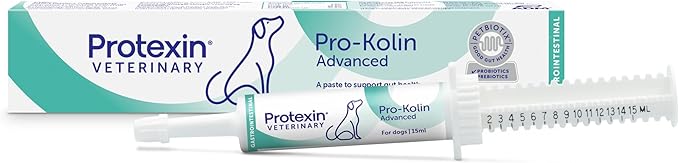
If you’ve ever taken a dog to the vet with an upset tummy, there’s a fair chance you came home with this. Pro-Kolin is made by Protexin, a respected veterinary brand, and it’s the probiotic I’d want in the cupboard for the classic “something’s not agreeing with them” day. It combines probiotics and prebiotics to restore the good gut bacteria, with ingredients that soothe the gut lining and help firm up loose stools quickly.
What makes it so easy to live with is the syringe. You measure the dose by your dog’s weight and squeeze it straight onto food or into the side of the mouth — no wrestling a tablet down, no waiting for a fussy dog to eat a chew. Most dogs take the palatable paste happily, and it’s genuinely fast-acting for the everyday upsets that don’t warrant a vet trip.
It’s earned a huge, loyal following for good reason — this is the one product here I’d call a must-have rather than a nice-to-have. Keep a syringe in for emergencies and you’ll be glad of it the next time your dog raids the bins. For ongoing, everyday gut support, the daily options below make more sense, but for acute upsets nothing here beats it.
- Vet-recommended brand for upset tummies
- Fast-acting probiotic + prebiotic paste
- Easy syringe — onto food or into the mouth
- The one I’d keep in the first-aid cupboard
- A short-term fix for upsets, not a daily supplement
2. Protexin Pro-Fibre
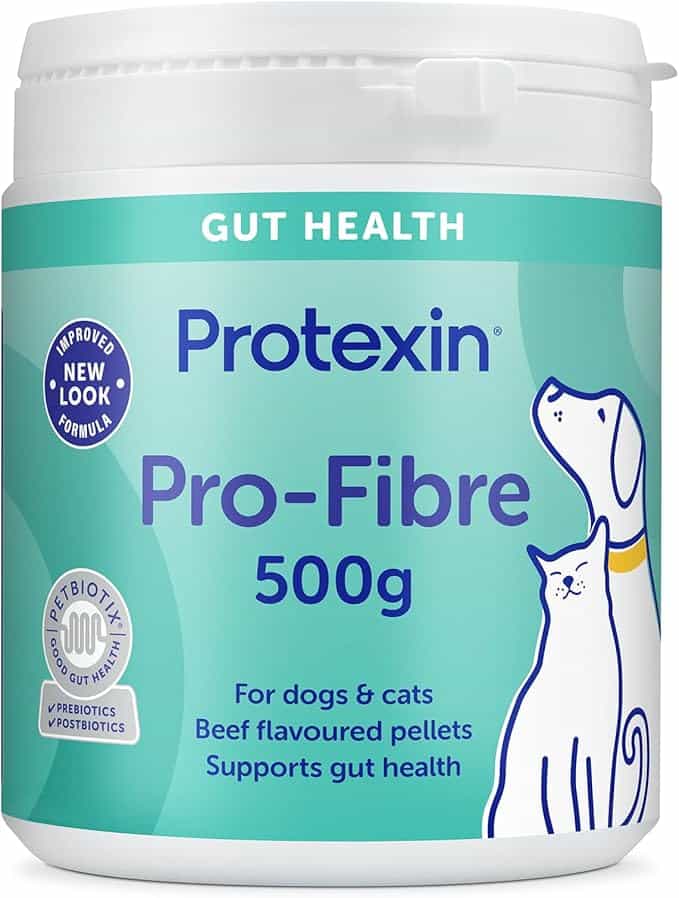
For a dog with an ongoing sensitive tummy — or the very British problem of dodgy anal glands — this is where I’d look. Pro-Fibre is another Protexin product, and rather than a quick-fix paste it’s a high-fibre daily supplement you sprinkle on food. That fibre, combined with prebiotics and postbiotics, feeds the good gut bacteria and adds bulk to stools, which is exactly what a lot of loose-stooled or gland-troubled dogs need.
I rate it as the long-term counterpart to Pro-Kolin: where the paste rescues a bad day, Pro-Fibre helps keep things consistent day to day. Firmer stools also naturally help empty the anal glands, which can spare you (and your dog) a trip to the vet for the dreaded gland squeeze. It’s a big tub that lasts a long time, so it’s good value for daily use.
It’s a supplement to a good diet rather than a magic fix, and a very fibre-sensitive dog may need you to build the dose up slowly. But for steady, everyday digestive support from a trusted veterinary brand, it’s an easy one to recommend.
- High fibre plus prebiotics and postbiotics
- Firms up stools and helps with anal glands
- Trusted Protexin veterinary brand
- Big tub — good value for daily use
- A daily supplement — not a quick fix for a sudden upset
3. Oimmal Probiotic Soft Chews
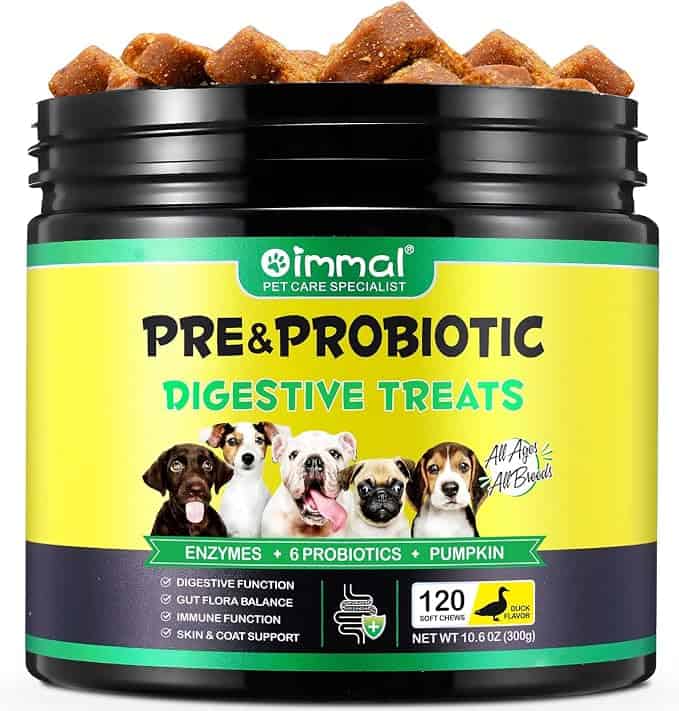
If you want something for everyday gut health that your dog will actually look forward to, a soft chew is the way to go — and I like this one for the sensible ingredient list. It pairs a pre- and probiotic blend with pumpkin and flaxseed, two things that are genuinely good for canine digestion, in a tasty chew most dogs take as a treat rather than medicine.
This is the option I’d choose for a dog with a generally slightly sensitive system, or one you just want to keep ticking over — a daily chew to support gut flora, digestion and everyday vitality. Because dogs enjoy them, you actually keep the routine going, which is where the real benefit of a daily probiotic comes from.
It’s a maintenance product rather than a treatment, so for a genuine upset I’d still reach for the Pro-Kolin paste. And as with any chew, factor the extra calories into the day. But for palatable, everyday gut support, it’s a lovely one to have on the shelf.
- Pre- and probiotic blend with pumpkin and flaxseed
- Tasty chew dogs take willingly
- Good for everyday gut and digestive support
- Easy way to keep a daily routine going
- Maintenance chew — not a treatment for a real upset
4. 150-Count Probiotic Chews
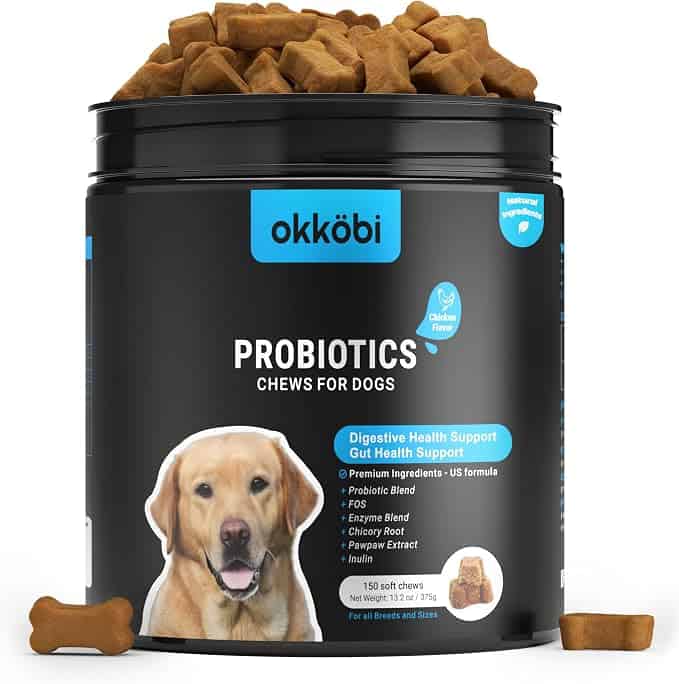
Daily supplements only work if you can afford to keep giving them, so for a big dog or a multi-dog house I’d look at a bulk tub like this. You get 150 chews combining probiotics with digestive enzymes and natural ingredients, aimed at gut health and diarrhoea support, and the larger count brings the cost per day right down.
The enzymes are a nice addition alongside the probiotics — they help break food down, which can suit dogs that struggle to digest richer meals. It’s chicken-flavoured and goes down as a treat, so like the Oimmal chews it’s easy to keep up, just in a more economical big-tub format.
It’s a newer product without the long track record of the Protexin range, so it’s more of a value daily option than a clinical one. But if you want palatable, everyday probiotic support without the bill mounting up, it’s the sensible-value pick.
- Big 150-count tub — low cost per day
- Probiotics plus digestive enzymes
- Tasty chicken chews for easy daily dosing
- Good for multi-dog or large-breed homes
- Newer product, less established than the vet brands
5. Remedime Probiotic & Prebiotic Paste
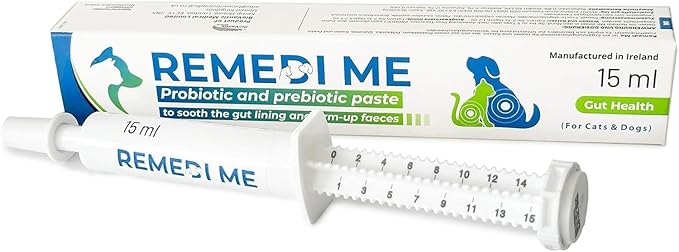
If you like the idea of a paste for upsets but want to spend less, this Remedime paste is the budget alternative — and at well under half the price of some, it’s a cheap thing to keep in reserve. It does the same core job: a probiotic and prebiotic paste that soothes the gut lining and helps firm up loose stools, in the familiar easy-dose syringe.
It works for cats as well as dogs, which is handy in a multi-pet home, and the low price means you can keep one in the cupboard without thinking twice. For mild wobbles and diet-change days it’s a sensible, affordable option.
It doesn’t carry the veterinary pedigree of Pro-Kolin, so for a dog that’s really struggling I’d still spend a little more on the Protexin paste. But as a low-cost, keep-it-handy probiotic paste, it earns its place, and it’s my pick if budget is the deciding factor.
- Cheapest option here — easy to keep in reserve
- Probiotic + prebiotic paste in an easy syringe
- Soothes the gut and firms up stools
- Works for cats too
- Lacks the veterinary pedigree of Pro-Kolin
How to Choose a Dog Probiotic
Paste or chew — acute vs everyday
The first thing I’d decide is what you actually need it for. A paste in a syringe is the right tool for a sudden upset — it’s fast, easy to dose and works when your dog is off their food. A daily chew or powder is for ongoing gut support: sensitive dogs, older dogs, or keeping things steady after a history of tummy trouble. Plenty of owners keep a paste in for emergencies and a chew on the go day to day.
When probiotics genuinely help
Probiotics are at their most useful around diet changes, courses of antibiotics (which wipe out good bacteria along with bad), stressful events, and mild bouts of loose stools. They top up the beneficial gut flora that keep digestion working. They’re a support, not a cure-all — they won’t fix a food that doesn’t suit your dog, so if upsets keep recurring, the diet itself is worth a proper look.
Introduce them gradually
As with any new supplement, start low and build up over a few days rather than diving in at a full dose, and follow the amount for your dog’s weight. Sudden changes — even good ones — can briefly unsettle a sensitive stomach. Look for products that name their strains and include prebiotics (the fibre that feeds the probiotics), which tends to signal a more thought-through formula.
Know when it’s a vet job
This is the important one. A probiotic is fine for a mild, short-lived tummy upset, but it is not a treatment for serious illness. The PDSA and vets advise seeing a vet if diarrhoea is severe, lasts more than a day or two, contains blood, or comes with vomiting, lethargy, a painful tummy or a dog that seems genuinely unwell — and always sooner for puppies, seniors or dogs with health conditions, who can go downhill quickly. Use a probiotic for the minor stuff, and don’t let it delay a vet visit for anything more.
Frequently Asked Questions
Do probiotics work for dogs?
Yes — for the right situations. Probiotics top up the beneficial bacteria in your dog’s gut, and they’re genuinely useful around diet changes, antibiotic courses, stress and mild bouts of loose stools. They support healthy digestion rather than curing disease, so they work best for everyday wobbles and maintenance. For serious or lasting stomach problems, they’re a complement to veterinary care, not a replacement.
When should I give my dog a probiotic?
Common times are during or after antibiotics, when switching foods, after a bout of diarrhoea, during stressful events, or ongoing for a dog with a sensitive stomach. A paste is ideal for a sudden upset; a daily chew or powder suits long-term support. Introduce any probiotic gradually and follow the dose for your dog’s weight.
Can I give my dog probiotics every day?
Yes — daily chews, powders and supplements like Protexin Pro-Fibre are designed for ongoing use, and many dogs benefit from steady, everyday gut support. Fast-acting pastes such as Pro-Kolin are meant for short courses around an upset rather than forever. Check the label, stick to the recommended amount, and if your dog needs a probiotic constantly just to cope, talk to your vet about the underlying cause.
What’s the best probiotic for a dog with diarrhoea?
For a sudden bout, a vet-style paste like Pro-Kolin Advanced is the go-to — it works fast and is easy to give when your dog is off their food. For a dog whose stools are chronically loose, a fibre-based daily supplement such as Protexin Pro-Fibre can help firm things up over time. But if diarrhoea is severe, bloody, or lasts more than a day or two, see your vet rather than relying on a supplement.
Are probiotics safe for dogs?
Dog-specific probiotics are very safe and well tolerated, with side effects rare and usually limited to mild wind or a briefly looser tummy if introduced too fast. Introduce them gradually, use products made for dogs rather than human supplements, and check with your vet first if your dog is on medication or has a health condition. When in doubt, your vet can recommend a suitable one.
Our Verdict
For most dogs, Pro-Kolin Advanced Paste is the best dog probiotic in the UK — the vet-trusted, fast-acting paste I’d keep in every cupboard for upset-tummy days. For ongoing help, Protexin Pro-Fibre firms up stools and eases anal glands, the Oimmal chews are a tasty daily option, the 150-count chews keep costs down, and the Remedime paste is the budget stand-in.
Gut health starts with the bowl, though. If your dog’s tummy is often unsettled, the food itself is the place to begin — our guides to the best dog foods for sensitive stomachs and the best dog foods for flatulence tackle the root cause. A daily salmon oil supports skin and coat alongside a probiotic, and the everyday basics in keeping your dog healthy matter just as much. For anything more than a mild upset, your vet comes first.